Saturday, September 19, 2026
JyotishShastra
Hindu Dharma - Official Portal
No Result
View All Result
  • Login
  • Register
  • Hinduism
    • Hindu Dharma
    • Hindu Tenets
    • Hindu Worship
      • Puja
      • Vrat Katha
    • God-Goddess
      • Deities
        • Vishnu
        • Bramha
        • Mahesh
      • Other Deities
    • Hindu Ethics
    • Hindu Scriptures
    • Rishi ! Acharya | Philosophers
    • Puja/Jaap/Hawan
    • Hindu Samskara
    • Hindu Philosophy
      • Hinduism
      • Arya Samaj
      • Jainism
      • Buddhism
    • Customs Traditions
  • Festival
    • Know Festival
    • Festival Cousins
    • Music
    • Prayers
      • Aarti
      • Bhajan
      • Kiratan
  • Spirituality
    • Kundali Yoga
    • Chanting
    • Healing
  • Temples
    • Tirth
    • Ashrams/Math
    • North India
    • South India
  • Yoga Tradition
    • Meditation
    • Pranayama
  • Vedic Science
    • Science & Beliefs
    • Vedic Architecture (Vastu)
    • Vedic Astrology
  • Health Remedies
    • Natural Remedies
    • Ayurveda
    • Health Tips
  • Hindu Facts
    • Hindu Dictionary
    • Symbolism
    • Quotations
    • Self Help
    • Sacred Rivers
    • Sacred Plants
    • Sacred Animals
    • Articles
    • Audios
    • Videos
    • Books
    • School of Thoughts
    • References
No Result
View All Result
  • Hinduism
    • Hindu Dharma
    • Hindu Tenets
    • Hindu Worship
      • Puja
      • Vrat Katha
    • God-Goddess
      • Deities
        • Vishnu
        • Bramha
        • Mahesh
      • Other Deities
    • Hindu Ethics
    • Hindu Scriptures
    • Rishi ! Acharya | Philosophers
    • Puja/Jaap/Hawan
    • Hindu Samskara
    • Hindu Philosophy
      • Hinduism
      • Arya Samaj
      • Jainism
      • Buddhism
    • Customs Traditions
  • Festival
    • Know Festival
    • Festival Cousins
    • Music
    • Prayers
      • Aarti
      • Bhajan
      • Kiratan
  • Spirituality
    • Kundali Yoga
    • Chanting
    • Healing
  • Temples
    • Tirth
    • Ashrams/Math
    • North India
    • South India
  • Yoga Tradition
    • Meditation
    • Pranayama
  • Vedic Science
    • Science & Beliefs
    • Vedic Architecture (Vastu)
    • Vedic Astrology
  • Health Remedies
    • Natural Remedies
    • Ayurveda
    • Health Tips
  • Hindu Facts
    • Hindu Dictionary
    • Symbolism
    • Quotations
    • Self Help
    • Sacred Rivers
    • Sacred Plants
    • Sacred Animals
    • Articles
    • Audios
    • Videos
    • Books
    • School of Thoughts
    • References
Hindu Dharma - Official Website
Home Hinduism Hindu Philosophy Hinduism

10 Interesting Facts about Lakshmana You May Not Know

10 Interesting Facts about Lakshmana You May Not Know
127
VIEWS
Share on FacebookShare on Twitter

Among the Hindu epics, Ramayana is one of the greatest. Here Lord Rama is believed to be the key character, along with whom is Lakshman who is also a highly important character. He is the highly devotional and inseparable bother of Lord Rama.

Lakshmana’s loyalty, honesty along with his short temper is known to all and not having him would be equal to missing an arm for the Lord. Thus, without him, the great war of Ramayan couldn’t have been won. He was a great character having great qualities but is lesser-known.

1. An incarnation of Sheshnag

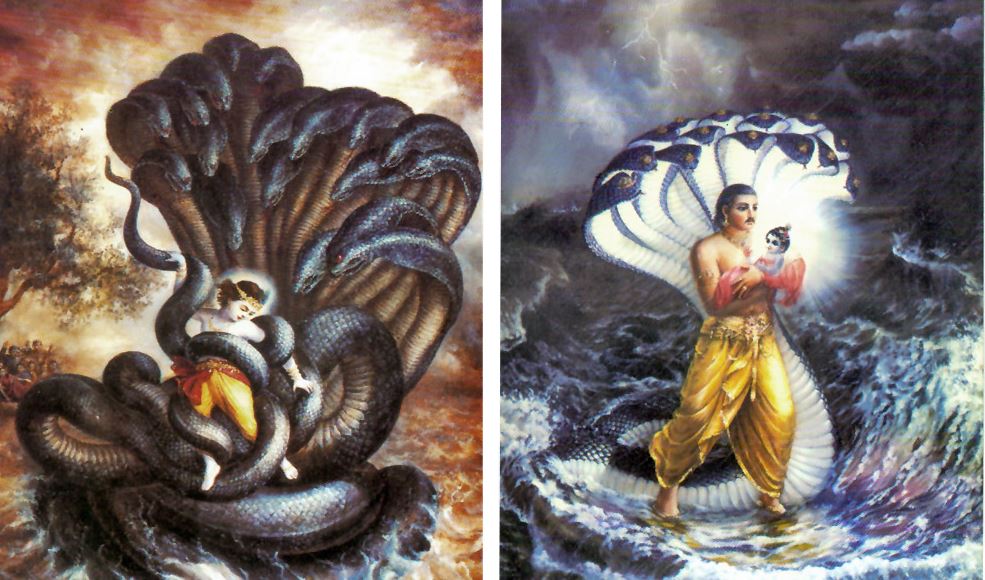
Lakshmana is an avatar of Sesh Naag, the serpent upon whom Lord Vishnu rests in Kshirasagara, which is the ocean of milk. Shesh naga is king of all nagas. He holds all the planets of the universe on its hood. Sheshnag and Lord Vishnu are inseparable. Lord Vishnu is often depicted as resting on sheshnag, When Lord Vishnu descended on earth as Rama, Sheshang accompanied him as Lakshman. This is the reason why we see ‘Tatik’ (a serpent sent by Ravan to destroy Mithila) running away after seeing Laksham.

2. Lakshmana reincarnated as Balarama
source

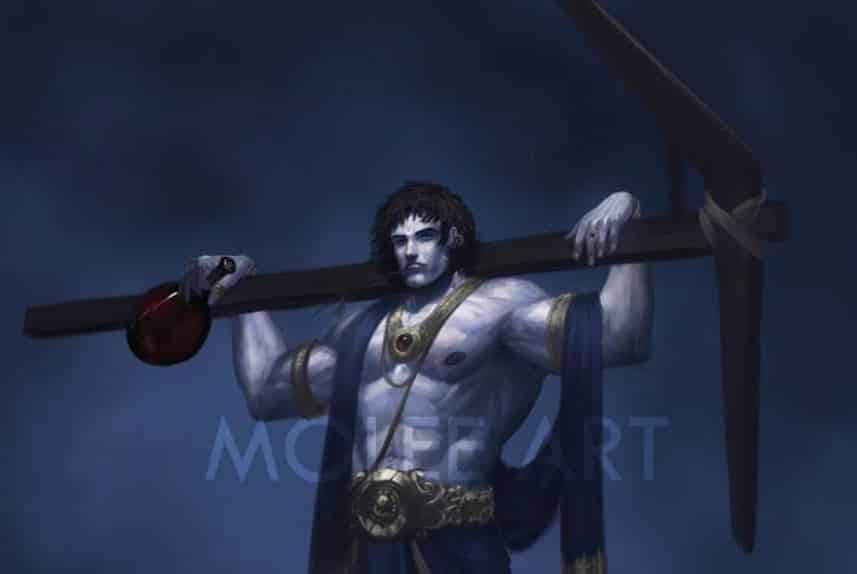
Lakshmana once said that since he is younger to Rama, each command by his elder brother had to be obeyed by him. This is the reason why his wish to become the elder brother was fulfilled in the next incarnation. While Lord Vishnu became the younger Lord Krishna, Sesh Naag became the elder brother Balarama.

Lakshmana was an incarnation of Sheshnag and Sheshnaag is inseparable from Vishnu, so when Vishnu descended on earth as Rama, Sheshnaag incarnated as Lakshman and when Vishnu later incarnated as Krishna, Sheshnaag accompanied him as his elder brother Balarama.

3. Lakshmana is also known as ‘Gudakesh’
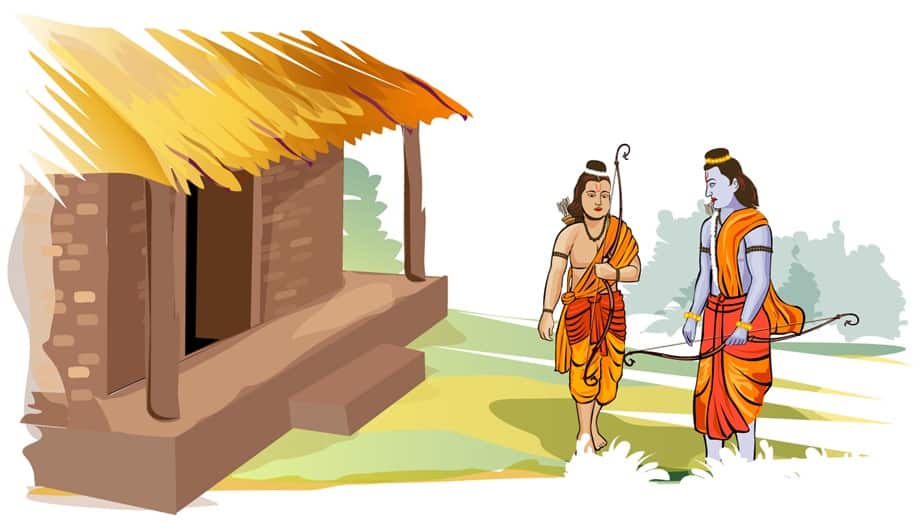
During Rama’s exile, Lakshman decided to stay awake for 14 years. He requested Nidra Devi, the Goddess of Sleep not to give him sleep for 14 years so that he can be awake and guard Rama and Sita. Nidra Devi was impressed with his dedication and granted him the boon.

This is the reason why Lakshmana is also known as Gudakesh. This was a very strong condition which made him capable of killing Meghnad. Meghnad had a boon that he can only be killed by a Gudakesh, a person who has defeated sleep.

4. Lakshmana never saw the face of any lady for 14 years

Lakshmana was a true gentleman. Even during the exile, Lakshmana stayed with his brother Ram and Sister in law Sita, but he never looked at her face. He only gazed at her feet. When Sugriva showed them the jewellery thrown by Sita when Ravan was carrying her to Lanka, Lakshman could only identify Sita’s anklet. He said he had seen them while laying his head on her feet in worship. He was not able to recognize any other jewellery as he has never presumed to look closely at them.

5. Lakshmana killed Ravana’s son Indrajit

source

After the battle, Sage Agastya came to Ayodhya. The Sage said, Meghnad was not an ordinary demon, he was a conqueror of Indralok. He also possessed the three ultimate weapons of Trimurti, Brahmastra, Narayanastra, and Pashupatastra and he could only be killed by someone who has not eaten, slept or seen the face of a woman for 14 years. Peoples were surprised that how Lakshman could fulfil these conditions.

Lakshman explained that he didn’t sleep for 14 years to guard Rama and Sita at night. Before going to exile his mother, Queen Sumitra told him to guard Rama and Sita while they sleep.

He didn’t eat for 14 years because Ram gave him food but never asked him to eat it. Lakshman in his loyalty believed that he was born to serve Lord Rama and so he never did anything without being told.

He had never seen the face of any lady during exile, though he was staying with Rama and Sita he never saw Sita’s face, he always gazed at her feet. Thus, he was not able to recognize any of Sita’s jewellery except her anklet.

6. The reason for his death.

When Rama realized that he had fulfilled his duties on earth, it was time for him to return to Vaikuntha. Rama invited Yama, but Yama put a condition that their conversation should be confidential and anyone who entered the room should be punished by a death sentence. So, Rama entrusted Lakshman to guard the room so that no one could enter.

Meanwhile, sage Durvasa came and expressed his desire to meet Rama. At first, Lakshman refused politely but sage insisted and threatened to curse Ayodhya. To save Ayodhya, Lakshman decided to intercept the meeting. After the incident in order to fulfil Ram’s promise, he went to the bank of river Saryu and gave his life.

However, Lakshman’s death was necessary before Rama’s death as he was an incarnation of Sheshnag and he had to return before Vishnu could return to Vaikuntha.

7. Lakshmana’s love and devotion for Rama was second to none.

Before the exile, Rama tries to convince his own wife and tells her that she could stay back in the kingdom with her in-laws if she so wishes. Rama does not even bring this topic of discussion to convince Lakshmana to stay back because Rama knows that Lakshmana is going to follow him to the exile anyway.

8. Lord Rama too immensely loved Lakshmana

Lakshmana was immensely loved by Rama. When Lakshmana was injured on the battlefield and almost died, Rama wept and confessed that he could live without the riches in Ayodhya, he could live without his beloved Sita but he could not live without brother Lakshman on his side.

9. Lakshmana was also an advocate of Rama

source

Lakshmana constantly talked to Rama after he got depressed with Sita’s disappearance. The Valmiki Ramayana quotes many occasions during the exile when Rama incessantly cried like a madman, asking trees, flowers, plants, and animals in the jungle about Sita’s whereabouts, and often fainted on the ground depressed and agonized, while Lakshmana took the role of a caretaker and counsellor who enthused him with words of motivation.

10. Lakshmana’s Guru

Rama was not just a brother to Lakshmana but also a father and a guru. Vishwamitra initiated Rama into many Astras and Shastras and became Rama’s guru (preceptor). Rama, in turn, gave them to Lakshmana and became the preceptor of Lakshmana.
Source link

Like this:

Like Loading…
Previous Post

Story of Ganesh | Hindu Academy | Jay Lakhani |

Next Post

How India Went From World’s Education Capital to Depths of Illiteracy – Part II

Related Posts

mangal dosh
Hinduism

मंगल दोष क्या होता है ? मंगल दोष कैसे दूर करे

21/03/2022
Positive and Negative Effects of Saturn in 12 Houses
Hinduism

Positive and Negative Effects of Saturn in 12 Houses

28/04/2020
The Untold Mystery of Lord Shiva and Shaivism in Vedic Texts
Hinduism

The Untold Mystery of Lord Shiva and Shaivism in Vedic Texts

25/04/2020
6 Most Important Vedic Gods According to Rig Veda
Hinduism

6 Most Important Vedic Gods According to Rig Veda

24/04/2020
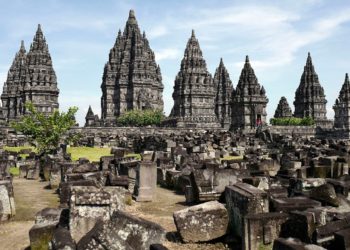
Prambanan Temple – Largest Hindu Temple Complex in Indonesia
Hinduism

Prambanan Temple – Largest Hindu Temple Complex in Indonesia

22/04/2020
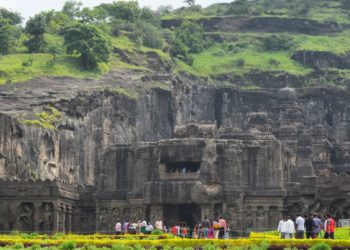
1200 Years Old Kailasa Temple Made Out of Single Rock
Hinduism

1200 Years Old Kailasa Temple Made Out of Single Rock

21/04/2020
Next Post
How India Went From World’s Education Capital to Depths of Illiteracy – Part II

How India Went From World’s Education Capital to Depths of Illiteracy – Part II

Discussion about this post

जुड़ें और शेयर करें

Are you interested in Hinduism, professional, educationist, scholar, blogger, or a religious services provider?

Join the hindu largest community portal to contribute n share news, information, blog, knowledge etc..

|| वसुधैव कुटुम्बकम् ||
॥ (महोपनिषद्, अध्याय ४, श्‍लोक ७१) ॥

Categories

  • Aarti
  • Bhajan
  • Customs Traditions
  • Hindu Dharma
  • Hindu Ethics
  • Hindu Philosophy
  • Hindu Worship
  • Hinduism
  • Hinduism
  • Jyotish Shastra
  • Mantra/Jaap
  • Meditation
  • NavGrah Planets
  • Puja
  • Puja/Jaap/Hawan
  • Spirituality
  • Temples
  • Tirth
  • Vishnu
  • Vrat Katha
  • Yoga Tradition

Recent Posts

  • मंगल दोष क्या होता है ? मंगल दोष कैसे दूर करे
  • नारायण बलि पूजा क्यों करनी चाहिए ?
  • Jaya Durga Lakshmi Saraswati – Durga Parameshwari by Vikram Hazra – Art of Living Bhajan
  • Positive and Negative Effects of Saturn in 12 Houses

Subscribe to Email

Subscribe to our monthly newsletters.

Hindu Temple Shrine Board
Shri Amarnath Ji | Shri Badarinath Kedarnath | Mata Vaishno Devi | Shri Banke Bihari | Mathura – Vrindavan | Tirupati Devasthanams | Shri Saibaba Shirdi | Shree Rameswaram | Shree Jagannath | Shree Dwarkadhish | Shri Kashi Vishwanath | Maa Kamakhya Devalaya | Shree Mahakaleshwar | Sree Guruvayur Devaswom | Shree Siddhivinayak

Disclaimer: HinduDharma.in website doesn’t represent or related to any Hindu religious board, radical organization, personality & so forth. This religious ideation is just crafted to share and promote facts, information, and teachings of Hindu culture for spreading Sanatana wisdom, practices for better-living n joyful life.

Aanodaya Services 2023-24, All Rights Reserved.

  • About
  • Privacy
  • Terms
  • Contact Us
Submit MY Article
No Result
View All Result
  • Hinduism
    • Hindu Dharma
    • Hindu Tenets
    • Hindu Worship
      • Puja
      • Vrat Katha
    • God-Goddess
      • Deities
      • Other Deities
    • Hindu Ethics
    • Hindu Scriptures
    • Rishi ! Acharya | Philosophers
    • Puja/Jaap/Hawan
    • Hindu Samskara
    • Hindu Philosophy
      • Hinduism
      • Arya Samaj
      • Jainism
      • Buddhism
    • Customs Traditions
  • Festival
    • Know Festival
    • Festival Cousins
    • Music
    • Prayers
      • Aarti
      • Bhajan
      • Kiratan
  • Our Culture
    • Bengali
    • Marathi
    • Rajasthani
    • Tamil
    • Telugu
  • Jyotish Shastra
    • NavGrah Planets
    • Gemstones
    • Kundali
    • Panchang
  • Spirituality
    • Kundali Yoga
    • Chanting
    • Healing
  • Temples
    • Tirth
    • Ashrams/Math
    • North India
    • South India
  • Yoga Tradition
    • Meditation
    • Pranayama
  • Vedic Science
    • Science & Beliefs
    • Vedic Architecture (Vastu)
    • Vedic Astrology
  • Health Remedies
    • Natural Remedies
    • Ayurveda
    • Health Tips
  • Hindu Facts
    • Hindu Dictionary
    • Symbolism
    • Quotations
    • Self Help
    • Sacred Rivers
    • Sacred Plants
    • Sacred Animals
    • Articles
    • Audios
    • Videos
    • Books
    • School of Thoughts
    • References

© 2023 Hindu Dharma - managaed by aanodaya.

Welcome Back!

Sign In with Facebook
Sign In with Google
OR

Login to your account below

Forgotten Password? Sign Up

Create New Account!

Sign Up with Facebook
Sign Up with Google
OR

Fill the forms below to register

All fields are required. Log In

Retrieve your password

Please enter your username or email address to reset your password.

Log In
Are you sure want to unlock this post?
Unlock left : 0
Are you sure want to cancel subscription?
%d