Saturday, August 29, 2026
JyotishShastra
Hindu Dharma - Official Portal
No Result
View All Result
  • Login
  • Register
  • Hinduism
    • Hindu Dharma
    • Hindu Tenets
    • Hindu Worship
      • Puja
      • Vrat Katha
    • God-Goddess
      • Deities
        • Vishnu
        • Bramha
        • Mahesh
      • Other Deities
    • Hindu Ethics
    • Hindu Scriptures
    • Rishi ! Acharya | Philosophers
    • Puja/Jaap/Hawan
    • Hindu Samskara
    • Hindu Philosophy
      • Hinduism
      • Arya Samaj
      • Jainism
      • Buddhism
    • Customs Traditions
  • Festival
    • Know Festival
    • Festival Cousins
    • Music
    • Prayers
      • Aarti
      • Bhajan
      • Kiratan
  • Spirituality
    • Kundali Yoga
    • Chanting
    • Healing
  • Temples
    • Tirth
    • Ashrams/Math
    • North India
    • South India
  • Yoga Tradition
    • Meditation
    • Pranayama
  • Vedic Science
    • Science & Beliefs
    • Vedic Architecture (Vastu)
    • Vedic Astrology
  • Health Remedies
    • Natural Remedies
    • Ayurveda
    • Health Tips
  • Hindu Facts
    • Hindu Dictionary
    • Symbolism
    • Quotations
    • Self Help
    • Sacred Rivers
    • Sacred Plants
    • Sacred Animals
    • Articles
    • Audios
    • Videos
    • Books
    • School of Thoughts
    • References
No Result
View All Result
  • Hinduism
    • Hindu Dharma
    • Hindu Tenets
    • Hindu Worship
      • Puja
      • Vrat Katha
    • God-Goddess
      • Deities
        • Vishnu
        • Bramha
        • Mahesh
      • Other Deities
    • Hindu Ethics
    • Hindu Scriptures
    • Rishi ! Acharya | Philosophers
    • Puja/Jaap/Hawan
    • Hindu Samskara
    • Hindu Philosophy
      • Hinduism
      • Arya Samaj
      • Jainism
      • Buddhism
    • Customs Traditions
  • Festival
    • Know Festival
    • Festival Cousins
    • Music
    • Prayers
      • Aarti
      • Bhajan
      • Kiratan
  • Spirituality
    • Kundali Yoga
    • Chanting
    • Healing
  • Temples
    • Tirth
    • Ashrams/Math
    • North India
    • South India
  • Yoga Tradition
    • Meditation
    • Pranayama
  • Vedic Science
    • Science & Beliefs
    • Vedic Architecture (Vastu)
    • Vedic Astrology
  • Health Remedies
    • Natural Remedies
    • Ayurveda
    • Health Tips
  • Hindu Facts
    • Hindu Dictionary
    • Symbolism
    • Quotations
    • Self Help
    • Sacred Rivers
    • Sacred Plants
    • Sacred Animals
    • Articles
    • Audios
    • Videos
    • Books
    • School of Thoughts
    • References
Hindu Dharma - Official Website
Home Hinduism Hindu Philosophy Hinduism

The God of Ayurveda and the Physician of Devas

The God of Ayurveda and the Physician of Devas
26
VIEWS
Share on FacebookShare on Twitter

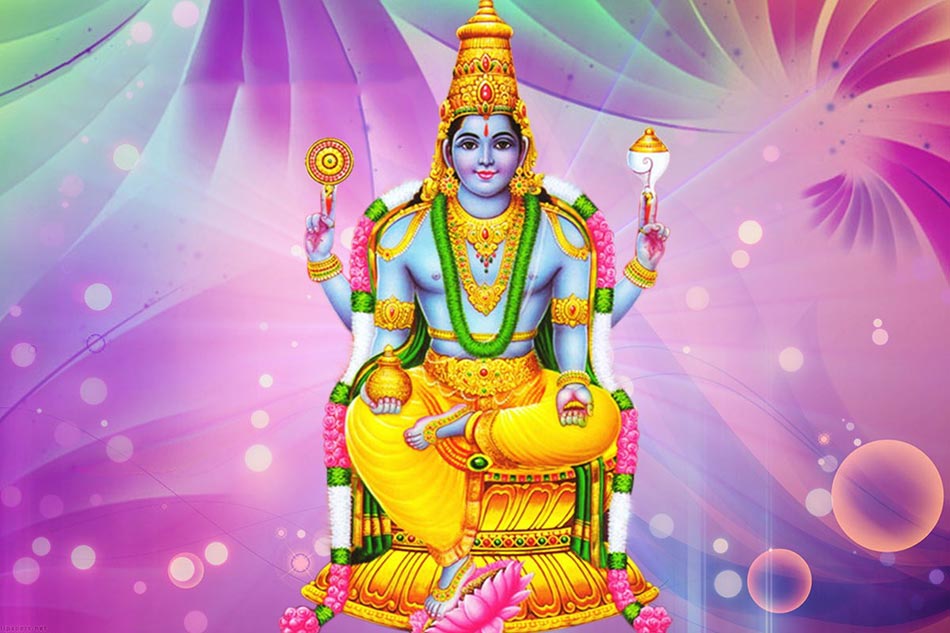
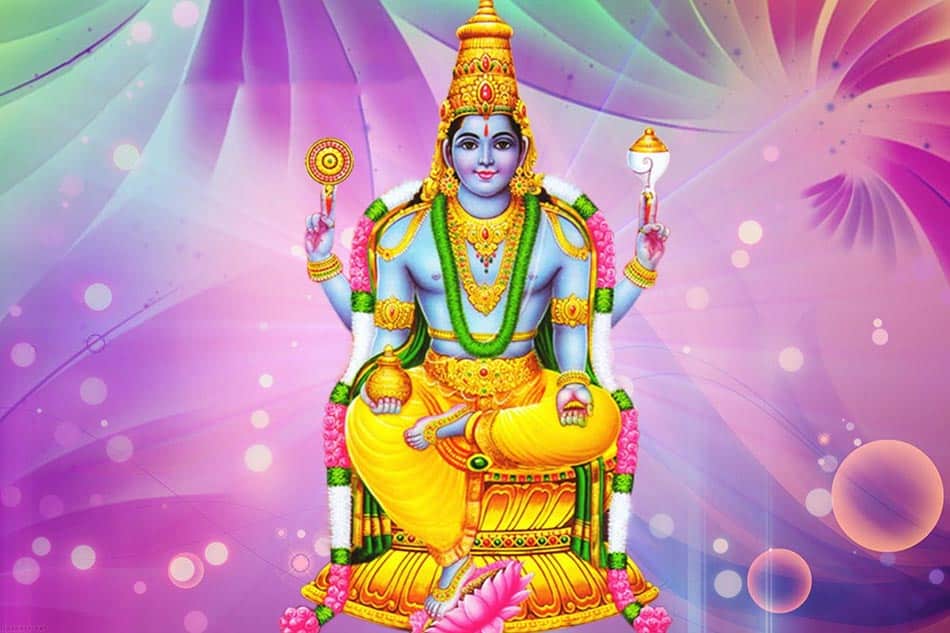
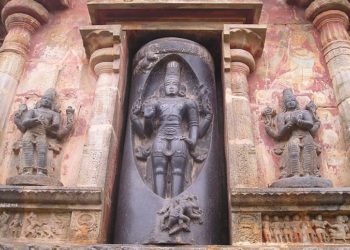
Known as a physician of the Devas, Dhanvantari is a celebrated figure amongst the practitioners of Ayurveda. They celebrate Dhanvantari’s birthday on Dhanteras every year too. In Sanatana-dharma, praying to Dhanvantari is supposed to bring sound health for worshippers.
There are many instances and references to Dhanvantars in history, all belonging to different eras and different period of time. Thus, the question about who the real Dhanvantars are have always created confusion. Is he just a mythical figure? Or is there any reference to real Dhanvantari who taught Ayurveda to Sushruta? Let’s find out.

Dhanvantari – The God of Ayurveda

But before we delve deep, let’s understand the meaning of the word Dhanvantari:

  1. “Dhanus” denotes the science of surgeries and is only indicative. Thus, Dhanvantari is someone who has seen the end of it.
  2. “Dhanvan” also might mean a desert, according to Rigveda – V.36.1. Thus, Dhanvachara means the one who moves in a desert.

According to the sources, there are references to four “major” Dhanvantars:

1. Dhanvantari – the physician of Devas

When Devas and Asuras churned the ocean for Amri (Samudra Manthan), Dhanvantari arrived with a jar of elixir on the day of Dhanteras. It was the same event when Lord Vishnu took a female avatar, Mohini.

Source 1:

The mantra in the Vedas:

Dhanvan iva prapaasi

Meaning: Oh Lord, you are like the place where water is distributed to travelers in a desert.

Many believe that Dhanvantari is the incarnation of Vishnu, who had come with that pot of nectar in his hand in the desert of worldly existence.

Source 2:

In Ramayana (Balakanda, Sarga 45), Dhanvantari is described as a being who emerged from the milky ocean after a churning of 1000 years. He had a water pitcher, known as kamandalu in Sanskrit, with one hand, and a staff (danda) in the other hand.

2. Sri Dhanvantari

– the one who was taught Ayurveda by Sun

Source 1:

In Brahmavaivartapurana, Brahma separated Ayurveda from the four Vedas while studying them. He is then said to have given the known of Ayurvedic science to Bhaskara (Sun God). After that, Bhaskara wrote his own version of Ayurveda and taught the same to 16 disciples. Among them, one was Dhanvantari. Each of the 16 disciples wrote their own version of Ayurveda.

3. Kasiraja Divodasa, surnamed Dhanvantari

– an incarnation of divine Dhanvantari and the one who taught Ayurveda to Sushruta

Source 1:

In Srimad Bhagavata Purana, there is a story about Bhagavan Dhanvatari when he revealed Ayurveda to the world. He is worshiped today as the pioneer of medical science in Hindu dharma. There is a shloka in Srimad Bhagavatam, Chapter 17 of Canto 9:

kasyasya kasis tat-putro
rashtro dirghatamah-pita
dhanvantarir dirghatamasa
ayur-veda-pravartakah
yajna-bhug vasudevamsah
smrita-matrarti-nasanah

Meaning:

The son of Kasya was Kasi, his son was Rashtra, who had a son named Dirghatama. Dirghatama had a son named Dhanvantari, who is the inaugurator of medical science and the incarnation of Vasudeva. When someone remembers the name of Dhanvantari, then s/he shall be released from all disease.

Source 2:

There are references to Kasiraja Divodasa Dhanvantari in the Susrutasmhita, the Agnivesasamhita, the Carakasamhita, the Vishnu Purana and the Harivamsa. Among them, Susrutasmhita talks fully about the contributions of Kasiraja Divodasa Dhanvantari. It says that Susruta was the foremost among the disciple of Kasipati. Acharya Sushruta quotes Kasiraja Divodasa Dhanvantari by saying, “Ayurveda originally formed one of the sub-sections of Arthaveda”.

Source 3:

In Vishnu Purana and Harvamsa, there is a fully credible and consistent genealogical account of Kasiraja Divodasa, telling us to which dynasty he belonged, which is the royal line founded by Pururavas of the lunar dynasty.

According to Harivasma, Kasiraja is said to be in the line of Anena, who was the descendant of Pururavas. Kasya represents the fifteenth generation from Anena, Dhanvantari represents the third from Kasya and Divodasa represents third from Dhanvantari.

Thus, Dhanvantari, the Senior, was the great-grandfather of Kasiraja Divodasa Dhanvantari.

He is said to have divided the Ayurveda into eight divisions:

  1. Kayacikitsa (Internal Medicine)
  2. Kaumarabhrtya or Balacikitsa (Paediatrics)
  3. Bhutavidya or Grahacikitsa (Psychiatry)
  4. Salakyatantra (Otto-Rhino-Laryngology & Opthalmology)
  5. Salyatantra (Surgery)
  6. Visatantra (Toxicology)
  7. Rasayanatantra (Geriatrics)
  8. Vajikaranatantra (The therapy for male sterility, impotency and the promotion of virility)

4. Sri Dhanvantari

– one of the nine jewels that adorned the court of Samrat Vikramaditya

In the court of Samrat Vikramaditya, there is a mention of a Dhanvantari who was one of the nine jewels that adorned the court. He was the author of “Dhanvantarinighantu”, a lexicon on drugs.

Conclusion

There isn’t concrete evidence to prove if Dhanvantari really existed or not. Most evidence shows that he did. But one must respect and praise the outstanding authorities of Ayurveda which has been honor throughout the history of medieval and ancient India in the name of Dhanvantari.

He is the progenitor of Ayurveda, and he stands on the top in the hierarchy of medicine in India.

There is a mantra that is taught in Ayurvedic colleges in India:

Om shankham chakram jalaukam
dadhad amruta ghatam charu dorbhi chaturbhih
Sukshma svacch ati hridyam sukha pari vilasanam
maulim ambhoja netram
Kalam bhodojo valangam kati tata vilasan
charu pitam baradhyam
Vande dhanvantarim tam nikhila gada vanam
praudha davagni leelam

Translated to:

We bow to Lord Dhanvantari holding in his graceful four hands a Conch shell, a Wheel, a Leech and a pot of heavenly nectar.

Within whose heart shines the purest and gentle beautiful blaze of light, which surrounds his head and emanates from his lotus eyes.

On the dark water whose body is luminous and gleaming. Waist and thighs are covered in yellow cloth and by whose mere play. All diseases are vanquished as if by a mighty forest fire.
Source link

Like this:

Like Loading…
Previous Post

Dharm News In Hindi : Tamil Nadu has 1200 years old Varaha Cave Temple, the third incarnation of Lord Vishnu. | तमिलनाडु में है 1200 साल पुराना वराह गुफा मंदिर, भगवान विष्णु का तीसरा अवतार हैं ये

Next Post

Shakti Maa Kaali Ke Bhajan I ANURADHA PAUDWAL I Navratri 2017 Special I Full Audio Songs

Related Posts

mangal dosh
Hinduism

मंगल दोष क्या होता है ? मंगल दोष कैसे दूर करे

21/03/2022
Positive and Negative Effects of Saturn in 12 Houses
Hinduism

Positive and Negative Effects of Saturn in 12 Houses

28/04/2020
The Untold Mystery of Lord Shiva and Shaivism in Vedic Texts
Hinduism

The Untold Mystery of Lord Shiva and Shaivism in Vedic Texts

25/04/2020
6 Most Important Vedic Gods According to Rig Veda
Hinduism

6 Most Important Vedic Gods According to Rig Veda

24/04/2020
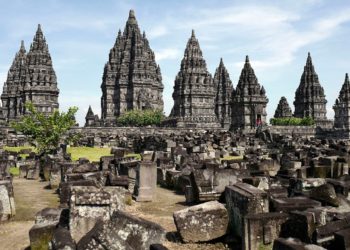
Prambanan Temple – Largest Hindu Temple Complex in Indonesia
Hinduism

Prambanan Temple – Largest Hindu Temple Complex in Indonesia

22/04/2020
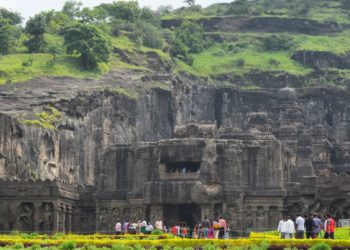
1200 Years Old Kailasa Temple Made Out of Single Rock
Hinduism

1200 Years Old Kailasa Temple Made Out of Single Rock

21/04/2020
Next Post
Shakti Maa Kaali Ke Bhajan I ANURADHA PAUDWAL I Navratri 2017 Special I Full Audio Songs

Shakti Maa Kaali Ke Bhajan I ANURADHA PAUDWAL I Navratri 2017 Special I Full Audio Songs

Discussion about this post

जुड़ें और शेयर करें

Are you interested in Hinduism, professional, educationist, scholar, blogger, or a religious services provider?

Join the hindu largest community portal to contribute n share news, information, blog, knowledge etc..

|| वसुधैव कुटुम्बकम् ||
॥ (महोपनिषद्, अध्याय ४, श्‍लोक ७१) ॥

Categories

  • Aarti
  • Bhajan
  • Customs Traditions
  • Hindu Dharma
  • Hindu Ethics
  • Hindu Philosophy
  • Hindu Worship
  • Hinduism
  • Hinduism
  • Jyotish Shastra
  • Mantra/Jaap
  • Meditation
  • NavGrah Planets
  • Puja
  • Puja/Jaap/Hawan
  • Spirituality
  • Temples
  • Tirth
  • Vishnu
  • Vrat Katha
  • Yoga Tradition

Recent Posts

  • मंगल दोष क्या होता है ? मंगल दोष कैसे दूर करे
  • नारायण बलि पूजा क्यों करनी चाहिए ?
  • Jaya Durga Lakshmi Saraswati – Durga Parameshwari by Vikram Hazra – Art of Living Bhajan
  • Positive and Negative Effects of Saturn in 12 Houses

Subscribe to Email

Subscribe to our monthly newsletters.

Hindu Temple Shrine Board
Shri Amarnath Ji | Shri Badarinath Kedarnath | Mata Vaishno Devi | Shri Banke Bihari | Mathura – Vrindavan | Tirupati Devasthanams | Shri Saibaba Shirdi | Shree Rameswaram | Shree Jagannath | Shree Dwarkadhish | Shri Kashi Vishwanath | Maa Kamakhya Devalaya | Shree Mahakaleshwar | Sree Guruvayur Devaswom | Shree Siddhivinayak

Disclaimer: HinduDharma.in website doesn’t represent or related to any Hindu religious board, radical organization, personality & so forth. This religious ideation is just crafted to share and promote facts, information, and teachings of Hindu culture for spreading Sanatana wisdom, practices for better-living n joyful life.

Aanodaya Services 2023-24, All Rights Reserved.

  • About
  • Privacy
  • Terms
  • Contact Us
Submit MY Article
No Result
View All Result
  • Hinduism
    • Hindu Dharma
    • Hindu Tenets
    • Hindu Worship
      • Puja
      • Vrat Katha
    • God-Goddess
      • Deities
      • Other Deities
    • Hindu Ethics
    • Hindu Scriptures
    • Rishi ! Acharya | Philosophers
    • Puja/Jaap/Hawan
    • Hindu Samskara
    • Hindu Philosophy
      • Hinduism
      • Arya Samaj
      • Jainism
      • Buddhism
    • Customs Traditions
  • Festival
    • Know Festival
    • Festival Cousins
    • Music
    • Prayers
      • Aarti
      • Bhajan
      • Kiratan
  • Our Culture
    • Bengali
    • Marathi
    • Rajasthani
    • Tamil
    • Telugu
  • Jyotish Shastra
    • NavGrah Planets
    • Gemstones
    • Kundali
    • Panchang
  • Spirituality
    • Kundali Yoga
    • Chanting
    • Healing
  • Temples
    • Tirth
    • Ashrams/Math
    • North India
    • South India
  • Yoga Tradition
    • Meditation
    • Pranayama
  • Vedic Science
    • Science & Beliefs
    • Vedic Architecture (Vastu)
    • Vedic Astrology
  • Health Remedies
    • Natural Remedies
    • Ayurveda
    • Health Tips
  • Hindu Facts
    • Hindu Dictionary
    • Symbolism
    • Quotations
    • Self Help
    • Sacred Rivers
    • Sacred Plants
    • Sacred Animals
    • Articles
    • Audios
    • Videos
    • Books
    • School of Thoughts
    • References

© 2023 Hindu Dharma - managaed by aanodaya.

Welcome Back!

Sign In with Facebook
Sign In with Google
OR

Login to your account below

Forgotten Password? Sign Up

Create New Account!

Sign Up with Facebook
Sign Up with Google
OR

Fill the forms below to register

All fields are required. Log In

Retrieve your password

Please enter your username or email address to reset your password.

Log In
Are you sure want to unlock this post?
Unlock left : 0
Are you sure want to cancel subscription?
%d