

Saturday, August 29, 2026
JyotishShastra
Hindu Dharma - Official Portal
No Result
View All Result
  • Login
  • Register
  • Hinduism
    • Hindu Dharma
    • Hindu Tenets
    • Hindu Worship
      • Puja
      • Vrat Katha
    • God-Goddess
      • Deities
        • Vishnu
        • Bramha
        • Mahesh
      • Other Deities
    • Hindu Ethics
    • Hindu Scriptures
    • Rishi ! Acharya | Philosophers
    • Puja/Jaap/Hawan
    • Hindu Samskara
    • Hindu Philosophy
      • Hinduism
      • Arya Samaj
      • Jainism
      • Buddhism
    • Customs Traditions
  • Festival
    • Know Festival
    • Festival Cousins
    • Music
    • Prayers
      • Aarti
      • Bhajan
      • Kiratan
  • Spirituality
    • Kundali Yoga
    • Chanting
    • Healing
  • Temples
    • Tirth
    • Ashrams/Math
    • North India
    • South India
  • Yoga Tradition
    • Meditation
    • Pranayama
  • Vedic Science
    • Science & Beliefs
    • Vedic Architecture (Vastu)
    • Vedic Astrology
  • Health Remedies
    • Natural Remedies
    • Ayurveda
    • Health Tips
  • Hindu Facts
    • Hindu Dictionary
    • Symbolism
    • Quotations
    • Self Help
    • Sacred Rivers
    • Sacred Plants
    • Sacred Animals
    • Articles
    • Audios
    • Videos
    • Books
    • School of Thoughts
    • References
No Result
View All Result
  • Hinduism
    • Hindu Dharma
    • Hindu Tenets
    • Hindu Worship
      • Puja
      • Vrat Katha
    • God-Goddess
      • Deities
        • Vishnu
        • Bramha
        • Mahesh
      • Other Deities
    • Hindu Ethics
    • Hindu Scriptures
    • Rishi ! Acharya | Philosophers
    • Puja/Jaap/Hawan
    • Hindu Samskara
    • Hindu Philosophy
      • Hinduism
      • Arya Samaj
      • Jainism
      • Buddhism
    • Customs Traditions
  • Festival
    • Know Festival
    • Festival Cousins
    • Music
    • Prayers
      • Aarti
      • Bhajan
      • Kiratan
  • Spirituality
    • Kundali Yoga
    • Chanting
    • Healing
  • Temples
    • Tirth
    • Ashrams/Math
    • North India
    • South India
  • Yoga Tradition
    • Meditation
    • Pranayama
  • Vedic Science
    • Science & Beliefs
    • Vedic Architecture (Vastu)
    • Vedic Astrology
  • Health Remedies
    • Natural Remedies
    • Ayurveda
    • Health Tips
  • Hindu Facts
    • Hindu Dictionary
    • Symbolism
    • Quotations
    • Self Help
    • Sacred Rivers
    • Sacred Plants
    • Sacred Animals
    • Articles
    • Audios
    • Videos
    • Books
    • School of Thoughts
    • References
Hindu Dharma - Official Website
Home Hinduism Hindu Dharma

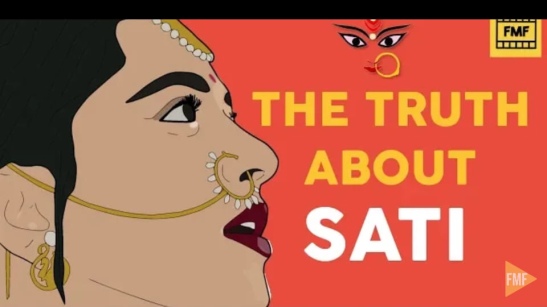
Truth about sati – How the britishers distorted our history

Truth about sati – How the britishers distorted our history
58
VIEWS
Share on FacebookShare on Twitter

Truth about sati – How the britishers distorted our history

In the 18th – 19th century, the east India company became the Masters of bengal . They were very clear that they have come to india to make money and not to spread civilization. So at that time the missionaries were not allowed to enter british territory and if they come then they were sent back on the next ship. The missionaries wanted to tell parliament that the india is a land of evil customs and the britishers are very much needed over there. So they concoct figures of thousands , fifty thousands , one lakh women emulating but the interesting thing is that these accounts only came from bengal and bengal does not have tradition of sati. Sati and jauhar are basically in rajasthan.

“As Evangelical Christian movement started gaining more prominence in India starting from 1800, enumeration of sati incidents sky-rocketed and suddenly annual 10,000 sati incidents were being reported from Bengal alone in 1803, a mind-boggling increase of 2000x, and some even suggested 50,000 sati occurrences annually! According to government figures, 8134 widows performed sati in the 14 years between 1815 and 1829, of which more than 60% cases were recorded in Calcutta, a region which had almost no history of sati, thereby casting doubt on the validity of government data.

Here we look at two other interesting factors. One is that most of the Satis, contrary to popular depictions, were middle-aged or older women; two-thirds were over the age of forty. Secondly in India, widows had been supported by State grants and also had the right to inherit property.

Both of these were changed by the British. Unlike in India, British women did not have the right to property, and the same British laws were also imposed in India where women could not own land. (This also led to the importance of male children, since without a male heir, people would stand to lose their lands). Secondly, there is some evidence that grants to widows were stopped by the colonial state.

The learned William Ward calculated, with a breakup, the total number of people sacrificed annually to the Hindu gods as 10,500. “However, on the very next page, he doubled the number of satis from five to ten thousand” Not to be outdone, Rev. David Brown cited William Chambers in estimating the number of sati incidents to be “about 50,000.” Charles Grant hypothesized a number of 33,000. The British government started maintaining a registry of sati cases between 1815 and 1828 in the three Presidencies of Bengal, Madras, and Bombay. In Bengal, a region not associated with sati, these government figures recorded 5,997 of 6,632 cases of sati – i.e., 90% of all sati cases from the three Presidencies were recorded in Bengal – which “raises uncertainties about the reliability of the data.” It is pertinent to note that it was Bengal where the missionaries were focusing on, and therefore unsurprisingly, from other places, sati was almost non-existent. “The Judge of Malabar notified that the practice was entirely absent in his area. ,,, The Judge of Trichinopoly informed around the same time that he could trace no instance of widow immolation for the previous ten years in the district.” But not one to let facts deter propaganda, Baptists kept up their campaign of calumny with frenzied vigour. “In 1819, Friend of India cited the figure of 100,000 satis per year. In 1829, the journal claimed that the custom had claimed over one million lives in Bengal alone!”

Sati was abolished in December 1829.

“Once the ban was announced, Company officials stopped their surveillance of sati, and the allegedly rampant practice seemed to have abruptly ceased. It was a truly unique case of prompt universal compliance of a government diktat.”

So it is amazing that we are supposed to believe that the moment william benetic abolished sati by stroke of pen, from the very next day in bengal the sati stopped!

Post-independence, 40 odd cases of Sati have been reported of which 2/3 are unsurprisingly from Rajasthan but none from bengal !

Let us only note that the missionaries are responsible for associating Hinduism with Sati much more prominently than would be fair. The missionary assault on Hinduism dramatized the practice of Sati, which had been “an ‘exceptional act’ performed by a minuscule number of Hindu widows over the centuries”, of which the occurrence had been “exaggerated in the nineteenth century by Evangelicals and Baptist missionaries eager to Christianize and Anglicize India”. (p.xix)

Sati was not confined the Hindu civilization. It existed elsewhere, both in Indo-European and in other cultures. Rulers in ancient China or Egypt are sometimes found buried with a number of wives, concubines and servants. In pre-Christian Europe, the practice was related (directly, not inversely) to the status of women in society: not at all in Greece, where women were very subordinate, but quite frequently among the more autonomous Celtic women. Among the Germanic people, a famous case is that of Brunhilde and her maidservants following Siegfried into death. Yet Indian secularists preferentially depict Sati as one of the unique “evils of Hindu society”.

However starting from 1800s till date, Sati (along with issues like caste system, Dalit oppression, Brahmin supremacy, Hindu patriarchy) has been used as a tool of propaganda by different anti-Hindu forces like British colonizers, Christian Evangelists and now, by social scientists and human rights activists.

The Sati that we know of today in our history and social studies textbooks, must be viewed in a historical context for what it is – an almost forgotten obscure custom, exceedingly rare, practiced by perhaps a handful of communities in some specific geographies, being suddenly brought into spotlight and sensationalized so as to shame, control and convert the Hindus.

Thus we have possibly the first instance of the manufacture of “atrocity literature.” The fabrication of evidence, the wanton exaggeration of data, the shameless duplicity of foreign players, rabid evangelical motivations, and the cold-blooded manipulation of public policy – all ingredients witnessed in the eighteenth century and in the first decades of nineteenth century, and again over two hundred years later.

Source – Sati – Evangelicals, Baptist Missionaries, and the Changing Colonial Discourse by meenakshi jain.

Book review – koenard elst.

By sourya Jaiswal
Like this:

Like Loading…

Related

Source link

Like this:

Like Loading…
Previous Post

Greatness of Chapter Eight of Bhagwat Gita

Next Post

शुक्रवार Special भजन I Do Ekam Do I Devi Bhajan I SONU NIGAM,ANURADHA PAUDWAL I Jai Maa Vaishno Devi

Related Posts

Jyotish News In Hindi : budhwar, 29 april ank rashifal, Wednesday ka ank rashifal, daily rashifal, aaj ka rashifal, numerology | बुधवार को लाभ की स्थिति रह सकती है, परिवार में सुखद वातावरण रहेगा
Hindu Dharma

Jyotish News In Hindi : budhwar, 29 april ank rashifal, Wednesday ka ank rashifal, daily rashifal, aaj ka rashifal, numerology | बुधवार को लाभ की स्थिति रह सकती है, परिवार में सुखद वातावरण रहेगा

28/04/2020
Dharm News In Hindi : gautam buddha story, prerak prasang, Motivational story about Success, inspirational story of gautam buddha | धैर्य के साथ आगे बढ़ते रहना चाहिए, क्योंकि कभी-कभी सफलता देर से मिलती है
Hindu Dharma

Dharm News In Hindi : gautam buddha story, prerak prasang, Motivational story about Success, inspirational story of gautam buddha | धैर्य के साथ आगे बढ़ते रहना चाहिए, क्योंकि कभी-कभी सफलता देर से मिलती है

27/04/2020
Braj Holi 2020 Date | Braj Holi Mahotsav Festival Complete Dates Time On Mathura, Vrindavan, Gokul, Barsana, Nandgaon | ब्रज के मंदिरों में वसंत पंचमी से ही होली शुरू हो जाती है, आज बरसाने में लड्‌डुओं और कल से दो दिन लट्‌ठमार होली
Hindu Dharma

Dharm News In Hindi : Akshaya Tritiya 2020 Puja Vidhi Date Kab Hai Time | Akshaya Tritiya Puja , Akshaya Tritiya Ka Snan Daan (Mahatva), Akshaya Tritiya Importance and Significance | दोपहर 1 बजे से पहले कर लें दान और पूजा इसके बाद शुरू हो जाएगी चतुर्थी तिथि

26/04/2020
Dharm News In Hindi : Ramadan (Ramzan) Roza Iftar Dates Time 2020 | Ramzan Sehar (Sahur) Time and Iftar Time, Significance, Rules Of Fasting – Ramzan Start And End Date (Ramzan Kab Se Hai) | पहली बार ऐसा होगा जब घर पर ही पढ़ी जाएगी नमाज, चांद दिखने पर 24 या 25 मई को मनेगी ईद
Hindu Dharma

Dharm News In Hindi : Ramadan (Ramzan) Roza Iftar Dates Time 2020 | Ramzan Sehar (Sahur) Time and Iftar Time, Significance, Rules Of Fasting – Ramzan Start And End Date (Ramzan Kab Se Hai) | पहली बार ऐसा होगा जब घर पर ही पढ़ी जाएगी नमाज, चांद दिखने पर 24 या 25 मई को मनेगी ईद

25/04/2020
Hindu Nav Varsh Chaitra Navratri 25th Match 2020 | Gudi Padwa, Jhulelal Jayanti – Jupiter Transiting In Makar Rashi and Here’s What It Means (Capricorn) | 25 मार्च से नववर्ष; 178 साल पहले चैत्र नवरात्रि में गुरु ने किया था मकर में प्रवेश, 2020 में भी ऐसा ही होगा
Hindu Dharma

Jyotish News In Hindi : Akshaya Tritiya 2020 26th April Durlabh Yog | Jupiter Transit (Guru Rashi Parivartan) In Makar, Chandra Shukra and Rohini Nakshatra Ka Yog After 23 Years | अक्षय तृतीया, शुक्र-चंद्र और रोहिणी नक्षत्र का योग 23 वर्षों के बाद, गुरु भी अपनी नीच राशि में

24/04/2020
Dharm News In Hindi : Akshay Tritya 2020 Date Kab Hai | Abujh Muhurat In Akshay Tritya, How to Worship Krishna Bhagwan – Akshay Tritiya Importance and Significance In Hindi | अक्षय तृतीया को कहा जाताा है अबूझ मुहूर्त, इस दिन मिलता है किए गए दान का अक्षय फल
Hindu Dharma

Dharm News In Hindi : Akshay Tritya 2020 Date Kab Hai | Abujh Muhurat In Akshay Tritya, How to Worship Krishna Bhagwan – Akshay Tritiya Importance and Significance In Hindi | अक्षय तृतीया को कहा जाताा है अबूझ मुहूर्त, इस दिन मिलता है किए गए दान का अक्षय फल

23/04/2020
Next Post
शुक्रवार Special भजन I Do Ekam Do I Devi Bhajan I SONU NIGAM,ANURADHA PAUDWAL I Jai Maa Vaishno Devi

शुक्रवार Special भजन I Do Ekam Do I Devi Bhajan I SONU NIGAM,ANURADHA PAUDWAL I Jai Maa Vaishno Devi

Discussion about this post

जुड़ें और शेयर करें

Are you interested in Hinduism, professional, educationist, scholar, blogger, or a religious services provider?

Join the hindu largest community portal to contribute n share news, information, blog, knowledge etc..

|| वसुधैव कुटुम्बकम् ||
॥ (महोपनिषद्, अध्याय ४, श्‍लोक ७१) ॥

Categories

  • Aarti
  • Bhajan
  • Customs Traditions
  • Hindu Dharma
  • Hindu Ethics
  • Hindu Philosophy
  • Hindu Worship
  • Hinduism
  • Hinduism
  • Jyotish Shastra
  • Mantra/Jaap
  • Meditation
  • NavGrah Planets
  • Puja
  • Puja/Jaap/Hawan
  • Spirituality
  • Temples
  • Tirth
  • Vishnu
  • Vrat Katha
  • Yoga Tradition

Recent Posts

  • मंगल दोष क्या होता है ? मंगल दोष कैसे दूर करे
  • नारायण बलि पूजा क्यों करनी चाहिए ?
  • Jaya Durga Lakshmi Saraswati – Durga Parameshwari by Vikram Hazra – Art of Living Bhajan
  • Positive and Negative Effects of Saturn in 12 Houses

Subscribe to Email

Subscribe to our monthly newsletters.

Hindu Temple Shrine Board
Shri Amarnath Ji | Shri Badarinath Kedarnath | Mata Vaishno Devi | Shri Banke Bihari | Mathura – Vrindavan | Tirupati Devasthanams | Shri Saibaba Shirdi | Shree Rameswaram | Shree Jagannath | Shree Dwarkadhish | Shri Kashi Vishwanath | Maa Kamakhya Devalaya | Shree Mahakaleshwar | Sree Guruvayur Devaswom | Shree Siddhivinayak

Disclaimer: HinduDharma.in website doesn’t represent or related to any Hindu religious board, radical organization, personality & so forth. This religious ideation is just crafted to share and promote facts, information, and teachings of Hindu culture for spreading Sanatana wisdom, practices for better-living n joyful life.

Aanodaya Services 2023-24, All Rights Reserved.

  • About
  • Privacy
  • Terms
  • Contact Us
Submit MY Article
No Result
View All Result
  • Hinduism
    • Hindu Dharma
    • Hindu Tenets
    • Hindu Worship
      • Puja
      • Vrat Katha
    • God-Goddess
      • Deities
      • Other Deities
    • Hindu Ethics
    • Hindu Scriptures
    • Rishi ! Acharya | Philosophers
    • Puja/Jaap/Hawan
    • Hindu Samskara
    • Hindu Philosophy
      • Hinduism
      • Arya Samaj
      • Jainism
      • Buddhism
    • Customs Traditions
  • Festival
    • Know Festival
    • Festival Cousins
    • Music
    • Prayers
      • Aarti
      • Bhajan
      • Kiratan
  • Our Culture
    • Bengali
    • Marathi
    • Rajasthani
    • Tamil
    • Telugu
  • Jyotish Shastra
    • NavGrah Planets
    • Gemstones
    • Kundali
    • Panchang
  • Spirituality
    • Kundali Yoga
    • Chanting
    • Healing
  • Temples
    • Tirth
    • Ashrams/Math
    • North India
    • South India
  • Yoga Tradition
    • Meditation
    • Pranayama
  • Vedic Science
    • Science & Beliefs
    • Vedic Architecture (Vastu)
    • Vedic Astrology
  • Health Remedies
    • Natural Remedies
    • Ayurveda
    • Health Tips
  • Hindu Facts
    • Hindu Dictionary
    • Symbolism
    • Quotations
    • Self Help
    • Sacred Rivers
    • Sacred Plants
    • Sacred Animals
    • Articles
    • Audios
    • Videos
    • Books
    • School of Thoughts
    • References

© 2023 Hindu Dharma - managaed by aanodaya.

Welcome Back!

Sign In with Facebook
Sign In with Google
OR

Login to your account below

Forgotten Password? Sign Up

Create New Account!

Sign Up with Facebook
Sign Up with Google
OR

Fill the forms below to register

All fields are required. Log In

Retrieve your password

Please enter your username or email address to reset your password.

Log In
Are you sure want to unlock this post?
Unlock left : 0
Are you sure want to cancel subscription?
%d