Saturday, August 29, 2026
JyotishShastra
Hindu Dharma - Official Portal
No Result
View All Result
  • Login
  • Register
  • Hinduism
    • Hindu Dharma
    • Hindu Tenets
    • Hindu Worship
      • Puja
      • Vrat Katha
    • God-Goddess
      • Deities
        • Vishnu
        • Bramha
        • Mahesh
      • Other Deities
    • Hindu Ethics
    • Hindu Scriptures
    • Rishi ! Acharya | Philosophers
    • Puja/Jaap/Hawan
    • Hindu Samskara
    • Hindu Philosophy
      • Hinduism
      • Arya Samaj
      • Jainism
      • Buddhism
    • Customs Traditions
  • Festival
    • Know Festival
    • Festival Cousins
    • Music
    • Prayers
      • Aarti
      • Bhajan
      • Kiratan
  • Spirituality
    • Kundali Yoga
    • Chanting
    • Healing
  • Temples
    • Tirth
    • Ashrams/Math
    • North India
    • South India
  • Yoga Tradition
    • Meditation
    • Pranayama
  • Vedic Science
    • Science & Beliefs
    • Vedic Architecture (Vastu)
    • Vedic Astrology
  • Health Remedies
    • Natural Remedies
    • Ayurveda
    • Health Tips
  • Hindu Facts
    • Hindu Dictionary
    • Symbolism
    • Quotations
    • Self Help
    • Sacred Rivers
    • Sacred Plants
    • Sacred Animals
    • Articles
    • Audios
    • Videos
    • Books
    • School of Thoughts
    • References
No Result
View All Result
  • Hinduism
    • Hindu Dharma
    • Hindu Tenets
    • Hindu Worship
      • Puja
      • Vrat Katha
    • God-Goddess
      • Deities
        • Vishnu
        • Bramha
        • Mahesh
      • Other Deities
    • Hindu Ethics
    • Hindu Scriptures
    • Rishi ! Acharya | Philosophers
    • Puja/Jaap/Hawan
    • Hindu Samskara
    • Hindu Philosophy
      • Hinduism
      • Arya Samaj
      • Jainism
      • Buddhism
    • Customs Traditions
  • Festival
    • Know Festival
    • Festival Cousins
    • Music
    • Prayers
      • Aarti
      • Bhajan
      • Kiratan
  • Spirituality
    • Kundali Yoga
    • Chanting
    • Healing
  • Temples
    • Tirth
    • Ashrams/Math
    • North India
    • South India
  • Yoga Tradition
    • Meditation
    • Pranayama
  • Vedic Science
    • Science & Beliefs
    • Vedic Architecture (Vastu)
    • Vedic Astrology
  • Health Remedies
    • Natural Remedies
    • Ayurveda
    • Health Tips
  • Hindu Facts
    • Hindu Dictionary
    • Symbolism
    • Quotations
    • Self Help
    • Sacred Rivers
    • Sacred Plants
    • Sacred Animals
    • Articles
    • Audios
    • Videos
    • Books
    • School of Thoughts
    • References
Hindu Dharma - Official Website
Home Hinduism Hindu Philosophy Hinduism

8 Interesting Facts About Lord Ganesha You May Not Know

8 Interesting Facts About Lord Ganesha You May Not Know
94
VIEWS
Share on FacebookShare on Twitter

The head of the lord Ganesha symbolizes the Atman or the soul, which is considered the ultimate reality of humanity and his human body symbolizes Maya, the trappings of earthly existence.

Lord Ganesha Wrote the Mahabharata

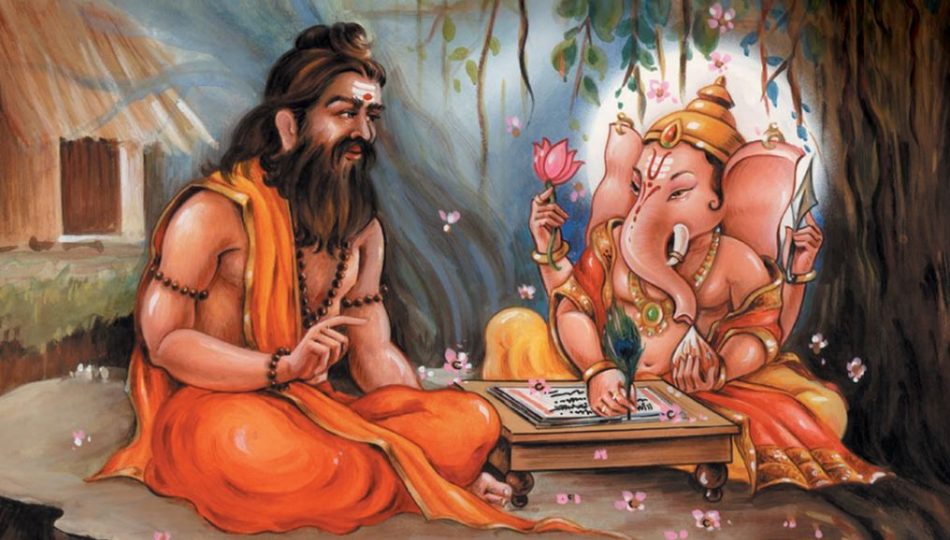
It is believed that Rishi Vyasa requested Lord Ganesha to write the Mahabharata as he recited it. He decided to do it after Vyasa agreed to recite it without any interruptions and Vyasa, in turn, made him promise he would understand what was being said before he wrote it down.

Meaning of Ganapati

‘Gana’ means category. Everything that we perceive through our senses or grasp through our mind can be expressed in terms of category. The principle from which all such categories have manifested themselves is Ganapati, the Lord of categories. In effect, it means the origin of the whole creation, God Himself;

Meaning of Gajanana or Gajamukha

A common Sanskrit word to denote elephant is ‘Gaja’.Hence the name Gajanana or Gajamukha (elephant-faced) for Ganapati. But the word ‘Gaja’ has a deeper connotation. ‘Ga’ indicates ‘Gati’, the final goal towards which the entire creation is moving. ‘Ja’ stands for ‘Janma’ or birth or origin. Hence ‘Gaja’ signifies God from whom the worlds have come out and towards whom they are progressing, to be ultimately dissolved in Him. The elephant head is thus purely symbolical and points to this truth;

A factor we observe in creation is its two-fold manifestation as the microcosm (Suksmanda) and macrocosm (Brahmanda). Each is a replica of the other. They are one in two and two in one. The elephant head stands for the macrocosm and the human body for the microcosm. The two forms one unit. Since the macrocosm is the goal of the microcosm, the elephant part has been given greater prominence by making it the head.

Elephant-Human form of Ganapati

The elephant-human form of Ganapati is the iconographical representation of the great Vedantic dictum, ‘tat-tvam-asi'(which means You the apparently limited individual are in essence the Cosmic Truth, the Absolute). The elephant stands for the cosmic whereas the human stands for the individual.

Lord Ganesha in Buddhism

Lord Ganesha’s popularity isn’t restricted to Hindu alone — he appears as Buddhist god Vinayaka in Mahayana Buddhism too — and is often seen dancing. He has distinct regional characteristics in Tibet, China, and Japan. The earliest stone statue of the Elephant God in North China dates back to as early as AD 531.

Indonesia prints Lord Ganesha on its 20,000 Rupiah note. Indonesia has strong cultural ties with India and Hinduism. Hinduism is practised by 1.7% of the total population, and by 83.5% of the population in Bali as of the 2010 census. Hinduism is one of the six official religions of Indonesia. In 2010, there was an estimated total of over 4 million Hindus in Indonesia.

Wives of Lord Ganesha

According to scriptures, Lord Ganesh had two wives Ridhhi (representing Prosperity) and Sidhhi (representing Intellectual Enlightenment). Furthermore, he had two sons – Ridhhi bore him Subha (representing Auspiciousness) while Sidhhi bore him Labha (representing Profit).

Birth of Lord Ganesha

According to Shiva Purana, it was Parvati’s friends Jaya and Vijaya’s decision to make Lord Ganesha. They had suggested Parvati that Nandi and others follow the instructions of Lord Shiva only. Therefore, there should be someone who follows Parvati’s orders too. Hence, Parvati made Ganesha from the dirt of her body.

108 Names of Lord Ganesha

  1. Akhurath = One who has Mouse as His Charioteer
  2. Alampata = Ever Eternal Lord
  3. Amit = Incomparable Lord
  4. Anantachidrupamayam = Infinite and Consciousness Personified
  5. Avaneesh = Lord of the whole World
  6. Avighna = Remover of Obstacles
  7. Balaganapati = Beloved and Lovable Child
  8. Bhalchandra = Moon-Crested Lord
  9. Bheema = Huge and Gigantic
  10. Bhupati = Lord of the Gods
  11. Bhuvanpati = God of the Gods
  12. Buddhinath = God of Wisdom
  13. Buddhipriya = Knowledge
  14. Buddhividhata = God of Knowledge
  15. Chaturbhuj = One who has Four Arms
  16. Devadeva = Lord of All Lords
  17. Devantakanashakarin = Destroyer of Evils and Asuras
  18. Devavrata = One who accepts all Penances
  19. Devendrashika = Protector of All Gods
  20. Dharmik = One who gives Charity
  21. Dhoomravarna = Smoke-Hued Lord
  22. Durja = Invincible Lord
  23. Dvaimatura = One who has two mothers
  24. Ekaakshara = He of the Single Syllable
  25. Ekadanta = Single-Tusked Lord
  26. Ekadrishta = Single-Tusked Lord
  27. Eshanputra = Lord Shiva’s Son
  28. Gadadhara = One who has The Mace as His Weapon
  29. Gajakarna = One who has Eyes like an Elephant
  30. Gajanana = Elephant-Faced Lord
  31. Gajananeti = Elephant-Faced Lord
  32. Gajavakra = Trunk of The Elephant
  33. Gajavaktra = One who has Mouth like an Elephant
  34. Ganadhakshya = Lord of All Ganas (Gods)
  35. Ganadhyakshina = Leader of All The Celestial Bodies
  36. Ganapati = Lord of All Ganas (Gods)
  37. Gaurisuta = The Son of Gauri (Parvati)
  38. Gunina = One who is The Master of All Virtues
  39. Haridra = One who is Golden Coloured
  40. Heramba = Mother’s Beloved Son
  41. Kapila = Yellowish-Brown Coloured
  42. Kaveesha = Master of Poets
  43. Krti = Lord of Music
  44. Kripalu = Merciful Lord
  45. Krishapingaksha = Yellowish-Brown Eyed
  46. Kshamakaram = The Place of Forgiveness
  47. Kshipra = One who is easy to Appease
  48. Lambakarna = Large-Eared Lord
  49. Lambodara = The Huge Bellied Lord
  50. Mahabala = Enormously Strong Lord
  51. Mahaganapati = Omnipotent and Supreme Lord
  52. Maheshwaram = Lord of The Universe
  53. Mangalamurti = All Auspicious Lord
  54. Manomay = Winner of Hearts
  55. Mrityuanjaya = Conqueror of Death
  56. Mundakarama = Abode of Happiness
  57. Muktidaya = Bestower of Eternal Bliss
  58. Musikvahana = One who has mouse as charioteer
  59. Nadapratithishta = One who Appreciates and Loves Music
  60. Namasthetu = Vanquisher of All Evils & Vices & Sins
  61. Nandana = Lord Shiva’s Son
  62. Nideeshwaram = Giver of Wealth and Treasures
  63. Omkara = One who has the Form Of OM
  64. Pitambara = One who has Yellow-Colored Body
  65. Pramoda = Lord of All Abodes
  66. Prathameshwara = First Among All
  67. Purush = The Omnipotent Personality
  68. Rakta = One who has Red-Colored Body
  69. Rudrapriya = Beloved Of Lord Shiva
  70. Sarvadevatman = Acceptor of All Celestial Offerings
  71. Sarvasiddhanta = Bestower of Skills and Wisdom
  72. Sarvatman = Protector of The Universe
  73. Shambhavi = The Son of Parvati
  74. Shashivarnam = One who has a Moon like Complexion
  75. Shoorpakarna = Large-Eared Lord
  76. Shuban = All Auspicious Lord
  77. Shubhagunakanan = One who is The Master of All Virtues
  78. Shweta = One who is as Pure as the White Color
  79. Siddhidhata = Bestower of Success & Accomplishments
  80. Siddhipriya = Bestower of Wishes and Boons
  81. Siddhivinayaka = Bestower of Success
  82. Skandapurvaja = Elder Brother of Skand (Lord Kartik)
  83. Sumukha = Auspicious Face
  84. Sureshwaram = Lord of All Lords
  85. Swaroop = Lover of Beauty
  86. Tarun = Ageless
  87. Uddanda = Nemesis of Evils and Vices
  88. Umaputra = The Son of Goddess Uma (Parvati)
  89. Vakratunda = Curved Trunk Lord
  90. Varaganapati = Bestower of Boons
  91. Varaprada = Granter of Wishes and Boons
  92. Varadavinayaka = Bestower of Success
  93. Veeraganapati = Heroic Lord
  94. Vidyavaridhi = God of Wisdom
  95. Vighnahara = Remover of Obstacles
  96. Vignaharta = Demolisher of Obstacles
  97. Vighnaraja = Lord of All Hindrances
  98. Vighnarajendra = Lord of All Obstacles
  99. Vighnavinashanaya = Destroyer of All Obstacles & Impediments
  100. Vigneshwara = Lord of All Obstacles
  101. Vikat = Huge and Gigantic
  102. Vinayaka = Lord of All
  103. Vishwamukha = Master of The Universe
  104. Vishwaraja = King of The World
  105. Yagnakaya = Acceptor of All Sacred & Sacrificial Offerings
  106. Yashaskaram = Bestower of Fame and Fortune
  107. Yashvasin = Beloved and Ever Popular Lord
  108. Yogadhipa = The Lord of Meditation

Source link

Like this:

Like Loading…
Previous Post

अंक ज्योतिष भविष्यफल 2020 – Numerology Horoscope 2020

Next Post

STAINLESS STEEL in ancient India

Related Posts

mangal dosh
Hinduism

मंगल दोष क्या होता है ? मंगल दोष कैसे दूर करे

21/03/2022
Positive and Negative Effects of Saturn in 12 Houses
Hinduism

Positive and Negative Effects of Saturn in 12 Houses

28/04/2020
The Untold Mystery of Lord Shiva and Shaivism in Vedic Texts
Hinduism

The Untold Mystery of Lord Shiva and Shaivism in Vedic Texts

25/04/2020
6 Most Important Vedic Gods According to Rig Veda
Hinduism

6 Most Important Vedic Gods According to Rig Veda

24/04/2020
Prambanan Temple – Largest Hindu Temple Complex in Indonesia
Hinduism

Prambanan Temple – Largest Hindu Temple Complex in Indonesia

22/04/2020
1200 Years Old Kailasa Temple Made Out of Single Rock
Hinduism

1200 Years Old Kailasa Temple Made Out of Single Rock

21/04/2020
Next Post
STAINLESS STEEL in ancient India

STAINLESS STEEL in ancient India

Discussion about this post

जुड़ें और शेयर करें

Are you interested in Hinduism, professional, educationist, scholar, blogger, or a religious services provider?

Join the hindu largest community portal to contribute n share news, information, blog, knowledge etc..

|| वसुधैव कुटुम्बकम् ||
॥ (महोपनिषद्, अध्याय ४, श्‍लोक ७१) ॥

Categories

  • Aarti
  • Bhajan
  • Customs Traditions
  • Hindu Dharma
  • Hindu Ethics
  • Hindu Philosophy
  • Hindu Worship
  • Hinduism
  • Hinduism
  • Jyotish Shastra
  • Mantra/Jaap
  • Meditation
  • NavGrah Planets
  • Puja
  • Puja/Jaap/Hawan
  • Spirituality
  • Temples
  • Tirth
  • Vishnu
  • Vrat Katha
  • Yoga Tradition

Recent Posts

  • मंगल दोष क्या होता है ? मंगल दोष कैसे दूर करे
  • नारायण बलि पूजा क्यों करनी चाहिए ?
  • Jaya Durga Lakshmi Saraswati – Durga Parameshwari by Vikram Hazra – Art of Living Bhajan
  • Positive and Negative Effects of Saturn in 12 Houses

Subscribe to Email

Subscribe to our monthly newsletters.

Hindu Temple Shrine Board
Shri Amarnath Ji | Shri Badarinath Kedarnath | Mata Vaishno Devi | Shri Banke Bihari | Mathura – Vrindavan | Tirupati Devasthanams | Shri Saibaba Shirdi | Shree Rameswaram | Shree Jagannath | Shree Dwarkadhish | Shri Kashi Vishwanath | Maa Kamakhya Devalaya | Shree Mahakaleshwar | Sree Guruvayur Devaswom | Shree Siddhivinayak

Disclaimer: HinduDharma.in website doesn’t represent or related to any Hindu religious board, radical organization, personality & so forth. This religious ideation is just crafted to share and promote facts, information, and teachings of Hindu culture for spreading Sanatana wisdom, practices for better-living n joyful life.

Aanodaya Services 2023-24, All Rights Reserved.

  • About
  • Privacy
  • Terms
  • Contact Us
Submit MY Article
No Result
View All Result
  • Hinduism
    • Hindu Dharma
    • Hindu Tenets
    • Hindu Worship
      • Puja
      • Vrat Katha
    • God-Goddess
      • Deities
      • Other Deities
    • Hindu Ethics
    • Hindu Scriptures
    • Rishi ! Acharya | Philosophers
    • Puja/Jaap/Hawan
    • Hindu Samskara
    • Hindu Philosophy
      • Hinduism
      • Arya Samaj
      • Jainism
      • Buddhism
    • Customs Traditions
  • Festival
    • Know Festival
    • Festival Cousins
    • Music
    • Prayers
      • Aarti
      • Bhajan
      • Kiratan
  • Our Culture
    • Bengali
    • Marathi
    • Rajasthani
    • Tamil
    • Telugu
  • Jyotish Shastra
    • NavGrah Planets
    • Gemstones
    • Kundali
    • Panchang
  • Spirituality
    • Kundali Yoga
    • Chanting
    • Healing
  • Temples
    • Tirth
    • Ashrams/Math
    • North India
    • South India
  • Yoga Tradition
    • Meditation
    • Pranayama
  • Vedic Science
    • Science & Beliefs
    • Vedic Architecture (Vastu)
    • Vedic Astrology
  • Health Remedies
    • Natural Remedies
    • Ayurveda
    • Health Tips
  • Hindu Facts
    • Hindu Dictionary
    • Symbolism
    • Quotations
    • Self Help
    • Sacred Rivers
    • Sacred Plants
    • Sacred Animals
    • Articles
    • Audios
    • Videos
    • Books
    • School of Thoughts
    • References

© 2023 Hindu Dharma - managaed by aanodaya.

Welcome Back!

Sign In with Facebook
Sign In with Google
OR

Login to your account below

Forgotten Password? Sign Up

Create New Account!

Sign Up with Facebook
Sign Up with Google
OR

Fill the forms below to register

All fields are required. Log In

Retrieve your password

Please enter your username or email address to reset your password.

Log In
Are you sure want to unlock this post?
Unlock left : 0
Are you sure want to cancel subscription?
%d